

Why SOC?
Our SOC technology supports a wide range of sectors, from renewable energy and mobility to industrial decarbonization and smart grids. Advancing climate goals requires sustainable energy systems that deliver real emission reductions and long‑term resilience. Our solutions help you meet energy transition goals.
Most energy systems waste heat. SOC technology uses it. Operating above 600 °C, Solid Oxide Cells reduce electrical losses and maximize conversion efficiency. Our solid oxide systems convert renewable electricity into clean molecules — and back into power when needed.
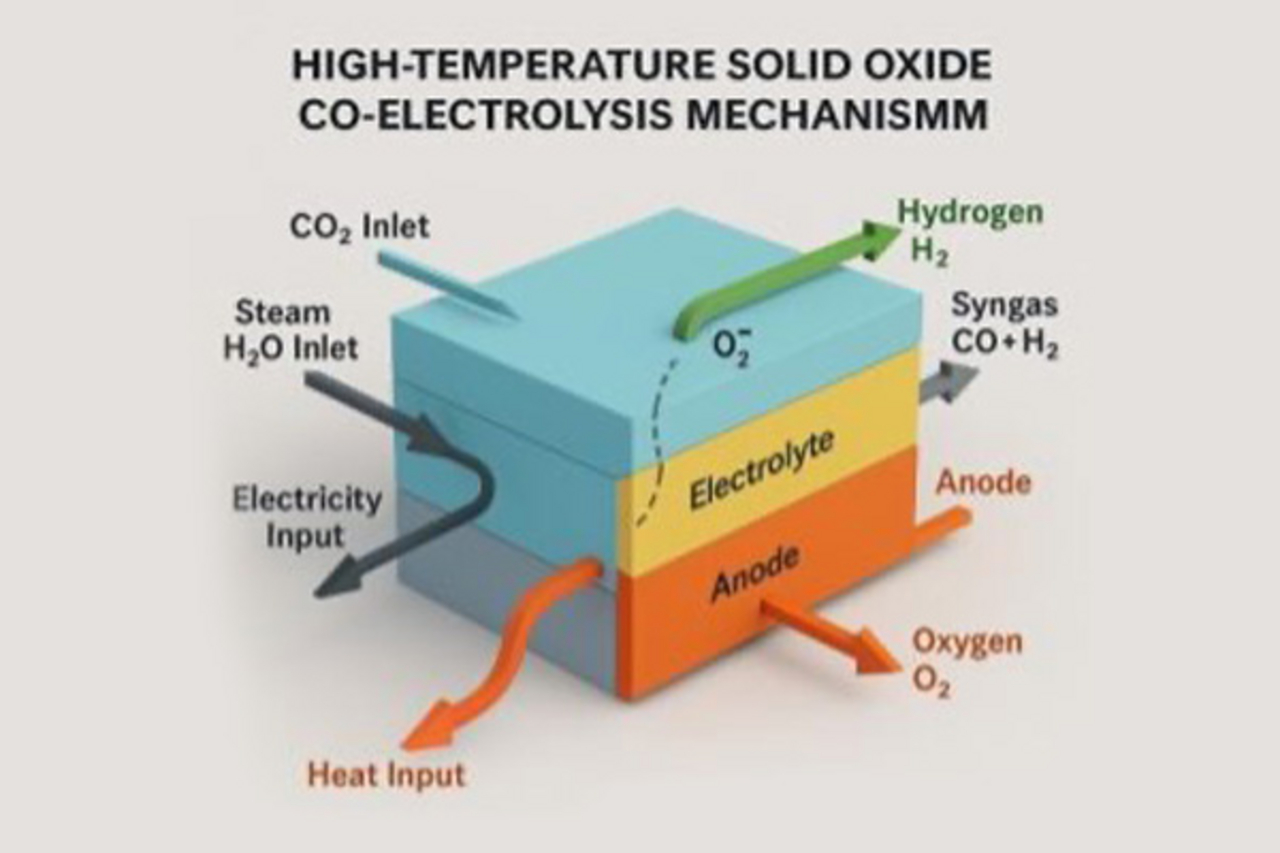
Fuel Cell Advantages — Clear, Powerful, Future‑Ready
- Exceptional electrical efficiency — above 85% Turning fuel into electricity and heat with industry‑leading performance.
- Zero SO₂ and NOx emissions Clean power generation without harmful exhaust gases.
- Ultra‑low noise operation Quiet, reliable energy — ideal for sensitive environments.
- Compatible with a wide range of fuels from hydrogen to biogas: flexible integration into diverse energy systems.
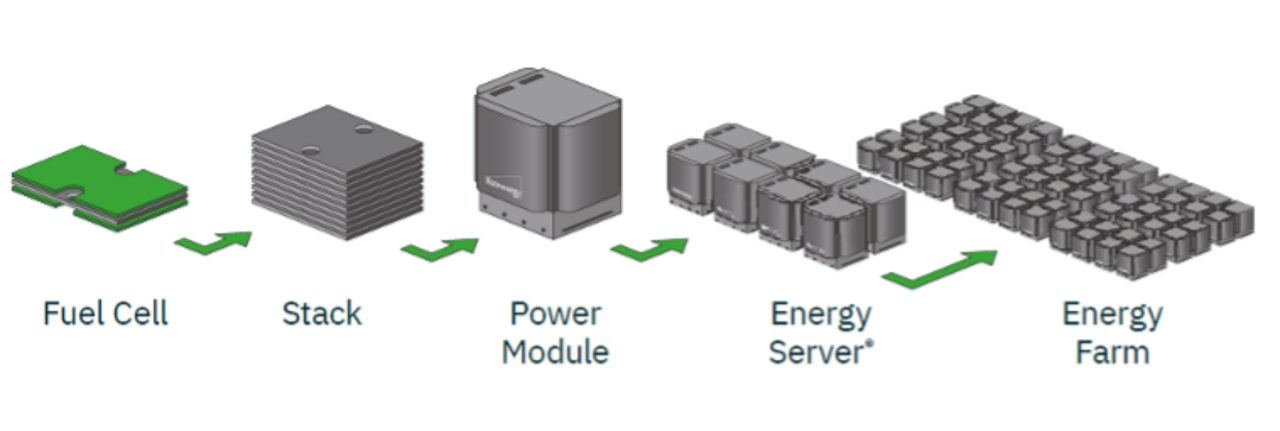
- Modular and scalable
SOEC vs PEM and Alkaline Electrolyzers
| Feature | SOEC | PEM | Alkaline |
|---|---|---|---|
| Operating Temp | 600–850°C | 50–80°C | 60–90°C |
| Electrolyte | Ceramic (YSZ) | Proton-conducting polymer | Liquid KOH |
| Feed | Steam | Water | Water |
| Efficiency | High (70–90%) | Medium (55–70%) | Medium (60–70%) |
| Heat Integration | Yes | Limited | Limited |
Application Fields
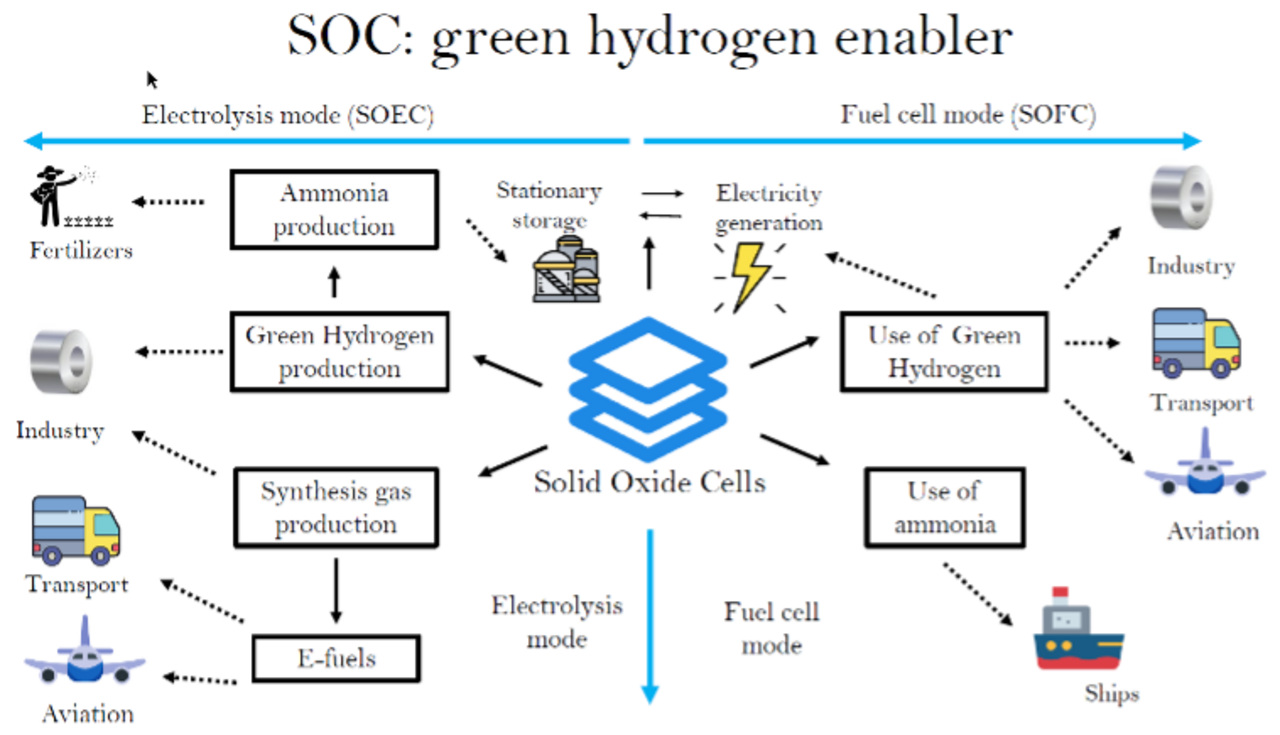
Energy Systems & Grids
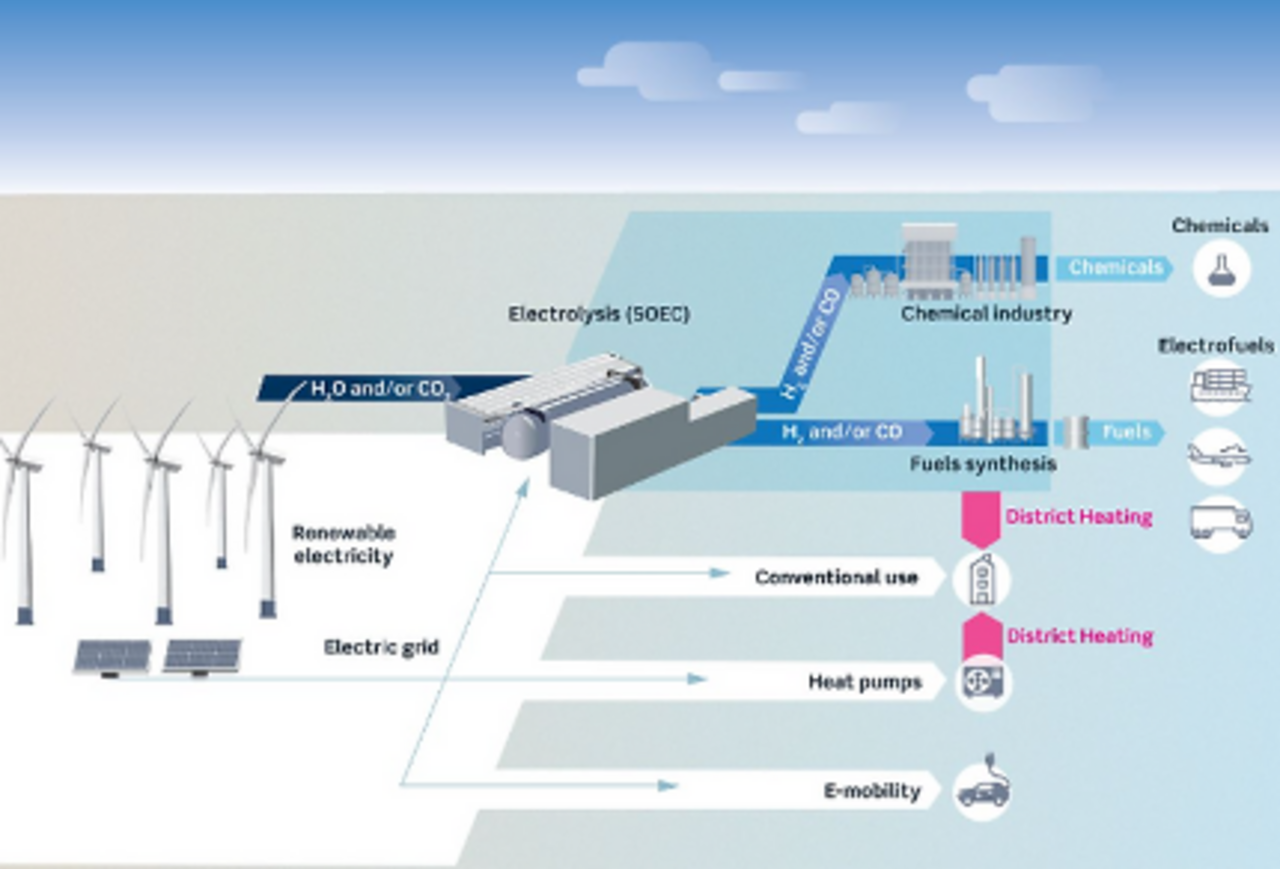
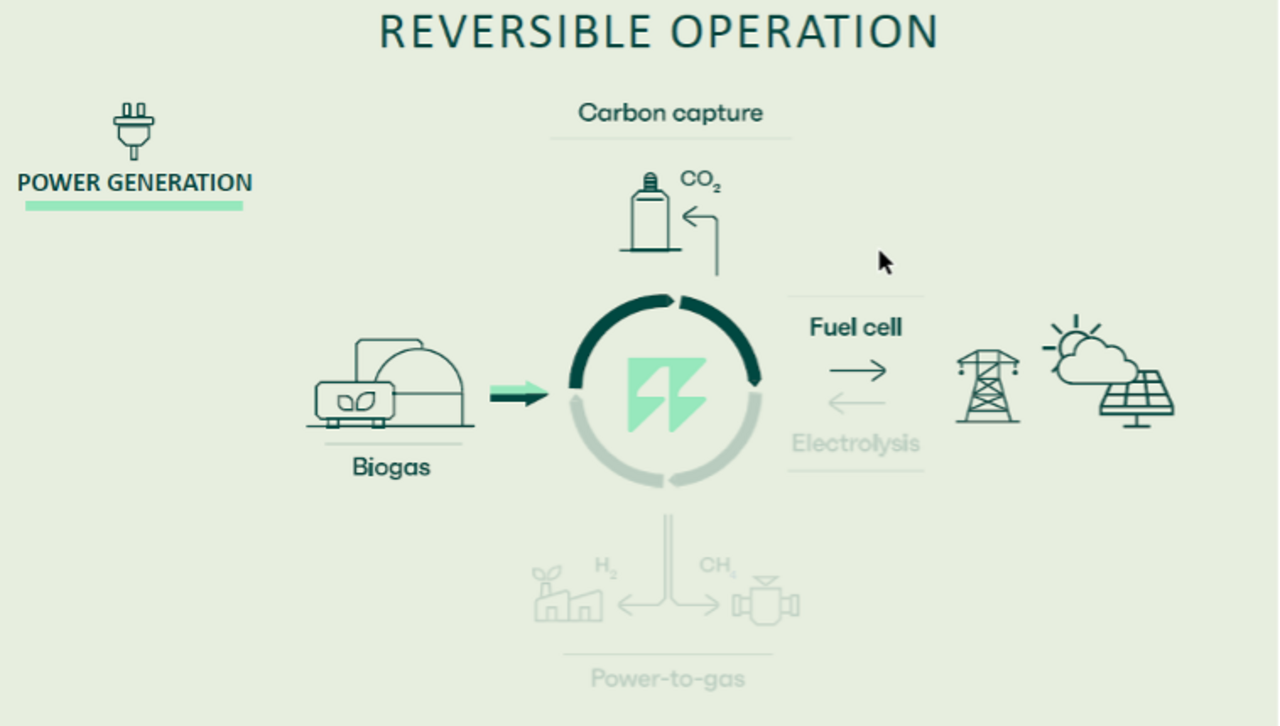
SOC enables true sector coupling: excess renewable electricity is converted into hydrogen (or eFuels like Methane) and reconverted into power when needed. This grid serving flexibility [FW1] maximizes renewable utilization and stabilizes decentralized grids.
Industrial Decarbonization
Industrial sites benefit from SOC’s ability to integrate electricity, fuel, and heat into existing processes - without disrupting operations.
Mobility & Transport
SOC technology makes hydrogen and synthetic fuels practical for sectors where batteries reach their limits. Fuel flexibility is one of the key reasons SOFC systems are emerging as highly attractive propulsion or APU solutions for maritime applications. Their ability to operate efficiently on a wide range of fuels gives ship operators unprecedented freedom in choosing energy sources – today and in the future. Compatible with hydrogen, ammonia‑derived fuels, Biogas, synthetic LNG
Circular Energy Storage (rSOC)
Reversible SOC systems switch flexible between electrolysis and fuel cell mode based on grid demand and energy prices – forming a chemical battery without capacity limits.
Research, Demonstration & Pilot Projects
Modular SOC stacks and systems support research, demonstration, and scale-up – from laboratory testing to industrial pilots.
Lighthouse Application – SOFC Prime Power for Data Centers
SOFC plants provide continuous, ultra-efficient prime power - replacing diesel generators and outperforming gas turbines at distributed scale.

From Application to Implementation
Every energy system is unique. VERMES combines SOC technology with integration expertise - from pilot projects to industrial deployment.